How to Organize a Round-Robin Championship: Complete Guide
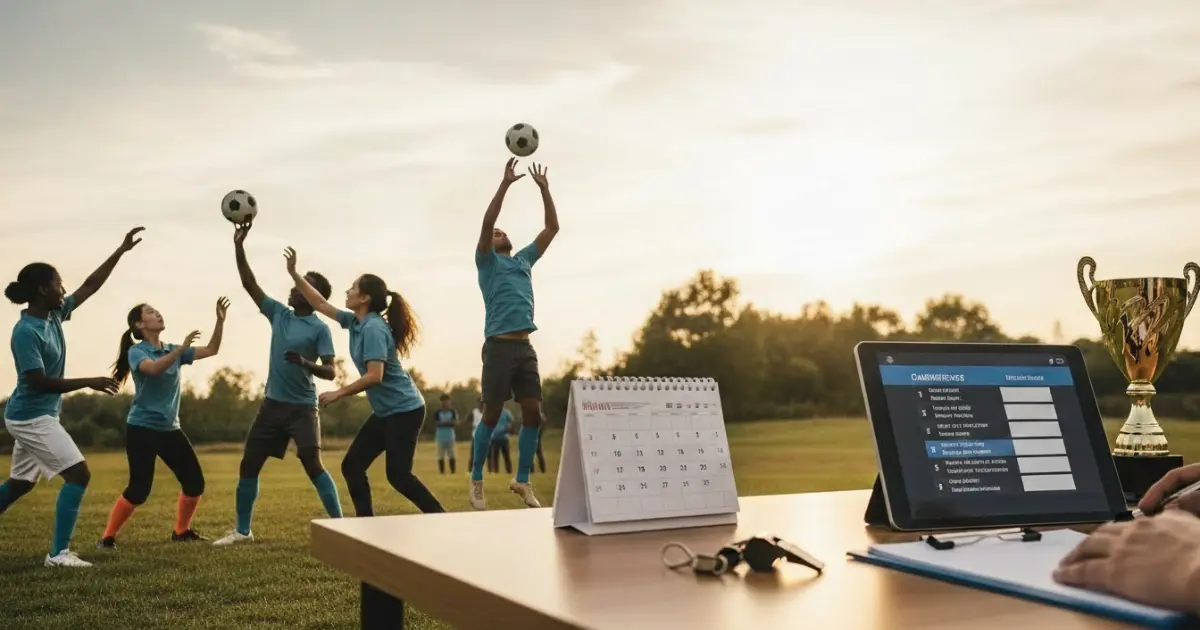
Have you ever wondered why the world's top football leagues, like the English Premier League and Brazil's top flight, use the round-robin format? The answer comes down to one simple but powerful word: fairness. Statistically, this model best rewards consistency and long-term planning, reducing the impact of luck that often decides knockout tournaments.
Bringing that efficiency to the amateur level — whether a company league, neighborhood competition, or a college tournament — requires more than a ball and enthusiasm. Organizing a round-robin championship demands method, discipline, and a clear understanding of the rules.
If you've taken on the responsibility of organizing a tournament and want to avoid common headaches (confusing schedules, refereeing controversies, and teams withdrawing), you're in the right place. This complete guide will take you from planning to the trophy presentation.
What Defines a Round-Robin Championship?
Before diving into logistics, it's essential to understand the core idea. Unlike knockout cups, where losing means elimination, in a round-robin system everyone plays everyone. The champion is the team that accumulates the most points across all rounds.
This creates an interesting dynamic: every match has the same mathematical weight, but tension builds over time. For the organizer, the challenge is keeping all teams engaged until the final matchday, even those with no title chances.
Initial Planning: The Foundation for Success
A classic mistake by new organizers is to start by creating the fixture list. Don't do that. The schedule should be the product of your planning, not the starting point.
Determining the Number of Participants
The number of teams dictates the pace of your championship. In a full double round-robin (home and away), the number of matchdays grows rapidly.
The basic formula to calculate the total number of matches is: N×(N−1)/2, where N is the number of teams. If you play only a single round, divide by 2.
- Practical Example: With 10 teams playing home and away, you'll have 90 matches total, spread across 18 rounds. Do you have the dates and venues for that?
If the calendar is tight, consider a single round or limit the number of entrants. Quality of experience beats quantity.
Calendar and Venues
Consistency is key. Try to keep matches on the same days and times. This helps players form habits and makes it easier for amateur athletes to balance matches with work and family.
Pro tip: Always reserve "buffer dates" at the end of the schedule. Heavy rain, unexpected holidays, or venue issues may force postponements. Without spare dates, your tournament can end anticlimactically.
Regulations: The Rules of the Game
A well-written rulebook is an organizer's best friend. It prevents heated disputes and ensures rules are applied uniformly.
Scoring System
The FIFA standard exists for a reason: it works.
- Win: 3 points
- Draw: 1 point
- Loss: 0 points
Avoid gimmicks like "extra points for goals" unless the tournament is purely recreational. Simplicity aids understanding and serious competition.
Tiebreakers
This is where many championships get stuck. When two teams finish level on points, who wins the title? Define a clear tie-breaking hierarchy before kickoff.
A widely accepted order is:
- Number of Wins: Rewards teams that won more matches.
- Goal Difference: Goals scored minus goals conceded.
- Goals Scored: Rewards the team that scored more goals.
- Head-to-Head: Who won when the tied teams played each other?
- Disciplinary Record: Fewer red/yellow cards—encourages fair play.
The Math of the Fixture List: How to Build Matchups
Generating a fixture list manually is an error-prone task. It's easy to miss a fixture or accidentally schedule a team to play many home games in a row.
For professional-grade round-robin scheduling, use algorithms or tournament management software. The most common method is the "Round Robin" algorithm, which rotates teams while keeping one fixed.
Pro tip: Don't waste time creating fixtures by hand. Use our Championship Schedule Generator to automatically produce perfect fixtures for round-robin or group-stage formats. If you'd like, use the Championship Schedule Generator to create professional schedules you can share with players in seconds.
If you're using spreadsheets, triple-check:
- Does everyone play everyone?
- Are rest intervals fair for all teams?
- Is there alternation in match times? (Nobody wants to always play at noon in direct sun.)
Managing the Tournament
Once the championship starts, the organizer's role shifts from architect to crisis manager.
Communication and Transparency
In the digital age, there's no excuse for not keeping information up to date. Players expect the table to be updated minutes after the round ends.
Create a broadcast group or use a dedicated app to post:
- Round results
- Updated standings
- Top scorers
- Suspensions for the next round
Transparency removes the suspicion of manipulation that often plagues amateur leagues.
Handling Walkovers (W.O.)
The walkover (W.O.) is a major problem in round-robin tournaments. When a team fails to appear, the competition balance is affected and the opponent who showed up is frustrated.
To mitigate this:
- Advance Fee: Require an entry fee or deposit that's returned if the team doesn't default.
- Default Score: Define a standard walkover score in the rules (commonly 3–0 to the attending team).
- Disqualification: Make it clear that repeated walkovers can lead to removal from the tournament.
The Importance of Technical Balance
In round-robin formats, if one team is far stronger than the rest, the tournament can become uninteresting midway. If a team is too weak, they become a punching bag and may withdraw.
For informal leagues or pickup competitions, balance is essential. Tools that level teams based on ratings or player statistics help keep excitement until the final round.
If you run a weekly pickup that functions as an ongoing championship, using an intelligent Team Generator can be the difference between a group that lasts years and one that collapses in months due to demotivation.
Conclusion
Knowing how to organize a round-robin championship is an exercise in leadership and patience. Success depends not only on play on the field but on clear rules, fair scheduling, and transparent communication.
Follow this guide to turn a chaotic weekend tournament into a respected and exciting competition. Remember: the ultimate goal is fun and the well-being of everyone involved.
Want to ensure balanced matches even before the championship starts? Use our Team Generator to balance squads and give your competition the best possible start.